
Minnesota Family Court Records
Minnesota family court records are public court documents kept at the District Court in each county. They cover divorce and dissolution cases, child custody orders, child support filings, paternity determinations, and other domestic relations matters. The free Minnesota Court Records Online (MCRO) system lets you search cases from any of the state's 87 counties by party name or case number. For certified copies of judgments or the full case file, contact the Court Administrator in the county where the case was filed.
Minnesota Family Court Records Overview
Where to Find Minnesota Family Court Records
District Courts hold all family court records in Minnesota. Each of the 87 counties has its own court that falls under one of 10 judicial districts. The Court Administrator at each courthouse manages case files and handles requests for copies. Family court records cover dissolution of marriage, child custody and parenting time orders, child support orders, paternity determinations, and domestic abuse protection orders.
Minnesota Court Records Online, called MCRO, is the state's free portal for searching district court records. It covers all 87 counties. You can search by party name, case number, or attorney. MCRO shows case info, hearing dates, docket entries, and public documents for cases filed after July 1, 2015. Orders and notices in family cases go back to July 1, 2005. Visit publicaccess.courts.state.mn.us to run a search. For older records or certified copies, contact the courthouse directly.
The Minnesota Judicial Branch also offers the Court Finder tool at mncourts.gov/Find-Courts.aspx. It has contact info, addresses, and hours for all 87 county courts. Use it to locate the right courthouse before you visit or mail a request.
The Minnesota Court Records Online system at publicaccess.courts.state.mn.us lets you search family court records by name or case number at no charge.
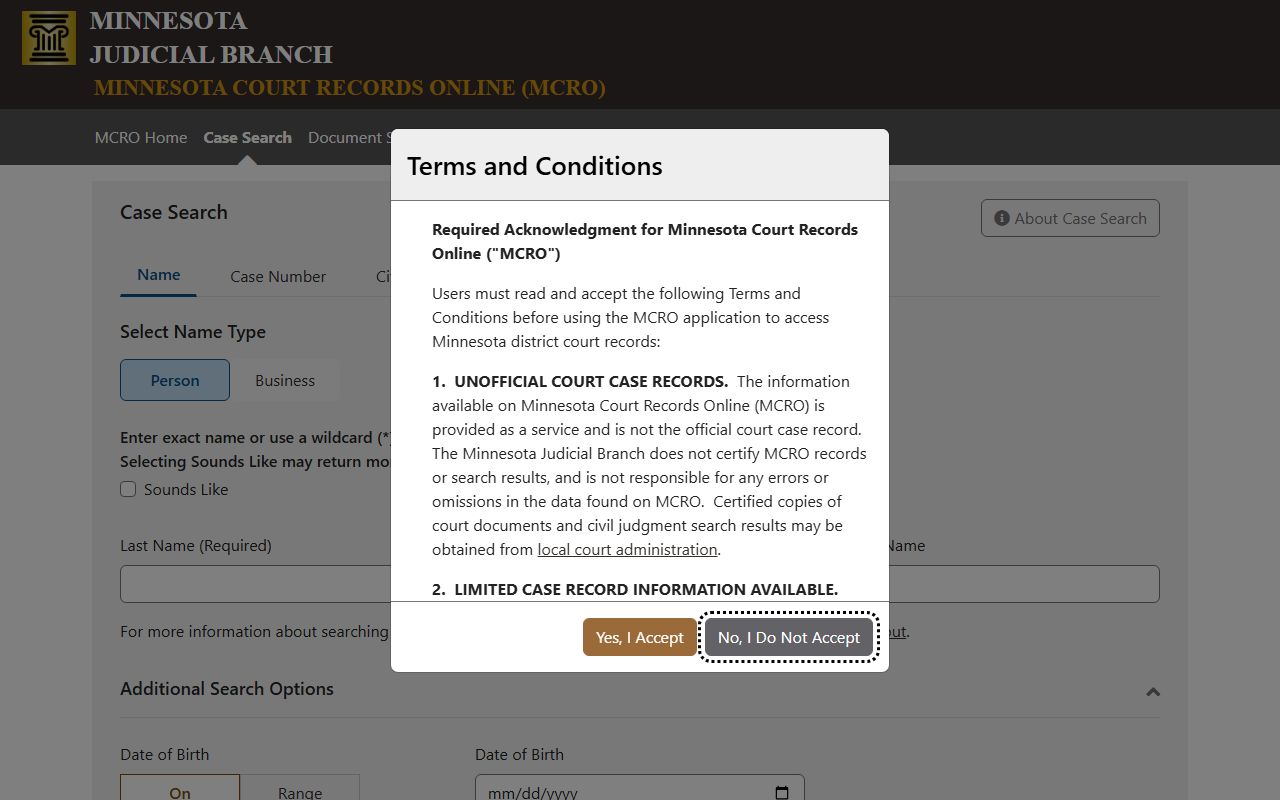
MCRO provides free document access for most cases filed after July 1, 2015, covering dissolution, custody, child support, and other family court types across all 87 Minnesota counties.
Note: For certified copies and full case files, contact the Court Administrator in the county where the case was filed. MCRO gives free access to basic case info and public documents but cannot issue official certified copies.
How to Search Family Court Records in Minnesota
Minnesota gives you several ways to find family court records. Online access works well for basic case info. Going to the courthouse is better when you need certified copies or want to review the full file. Some courts accept written requests by mail too.
Start at MCRO. Go to publicaccess.courts.state.mn.us and enter a party name or case number. The system shows case status, hearing dates, and some documents. Not every document is online, but you can get a solid overview. Family court orders going back to 2005 are available. Criminal cases without a conviction require a direct case number search rather than a name search.
Minnesota Public Access (MPA) Remote is another option for basic case lookups. Details are at mncourts.gov/Access-Case-Records/MPA-Remote.aspx. MPA shows case summaries, dockets, and civil judgments. It does not let you view full documents like MCRO does. MCRO is gradually replacing MPA as the main public access tool statewide.
More details about what MCRO covers are on the MCRO information page at mncourts.gov.
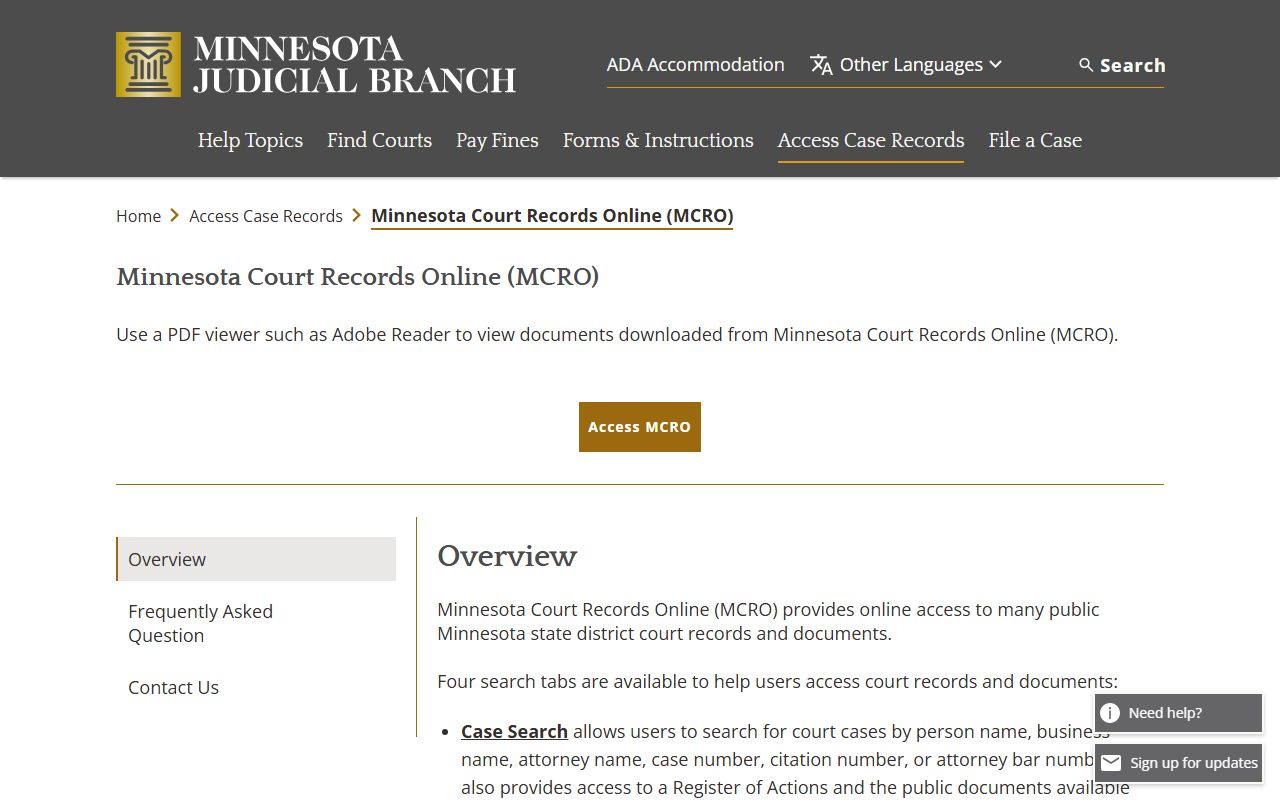
The MCRO info page explains search options, document types available, access levels, and how to find records both online and at a courthouse terminal.
The Access Case Records page at mncourts.gov gives an overview of all public access options for Minnesota court records, including MCRO, MPA Remote, and the appellate courts system.
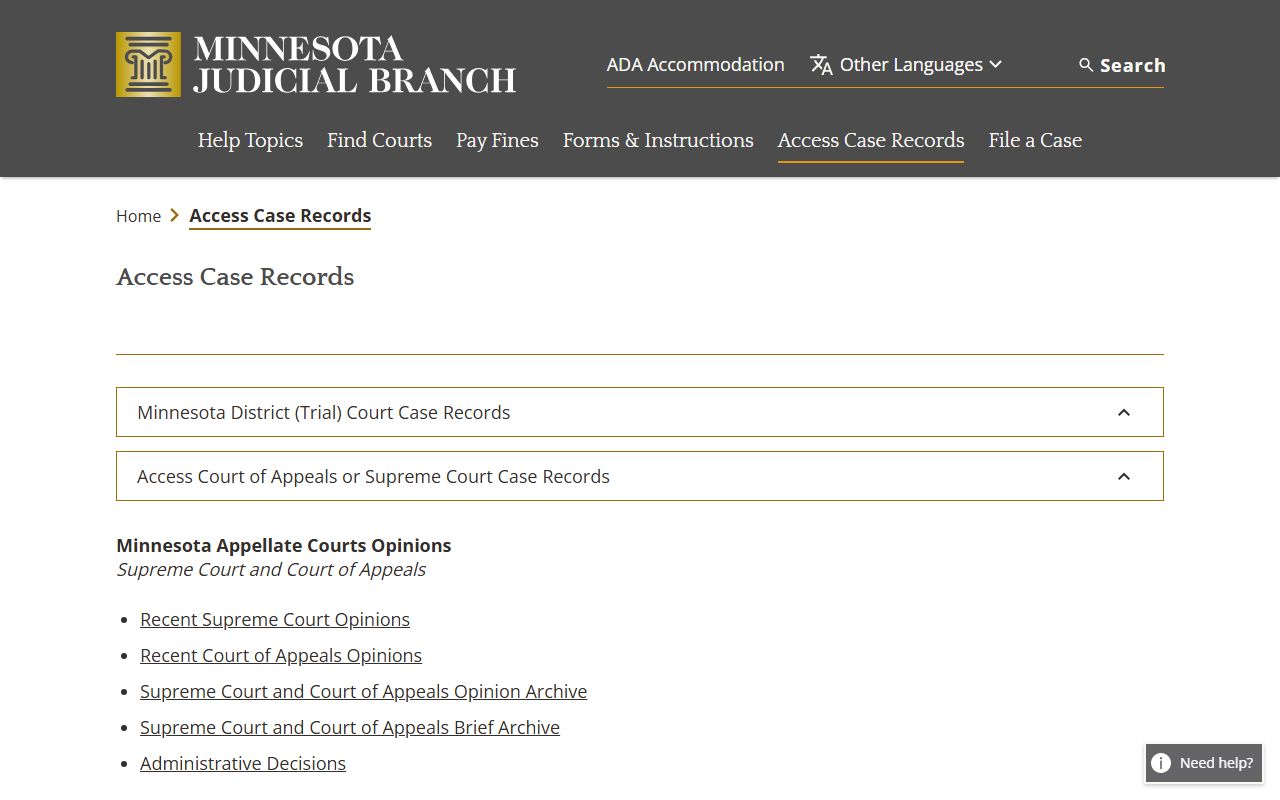
This page is a good starting point if you are not sure which system to use for your specific records request.
Minnesota Public Access Remote at mncourts.gov/Access-Case-Records/MPA-Remote.aspx is the older lookup system for basic case searches.
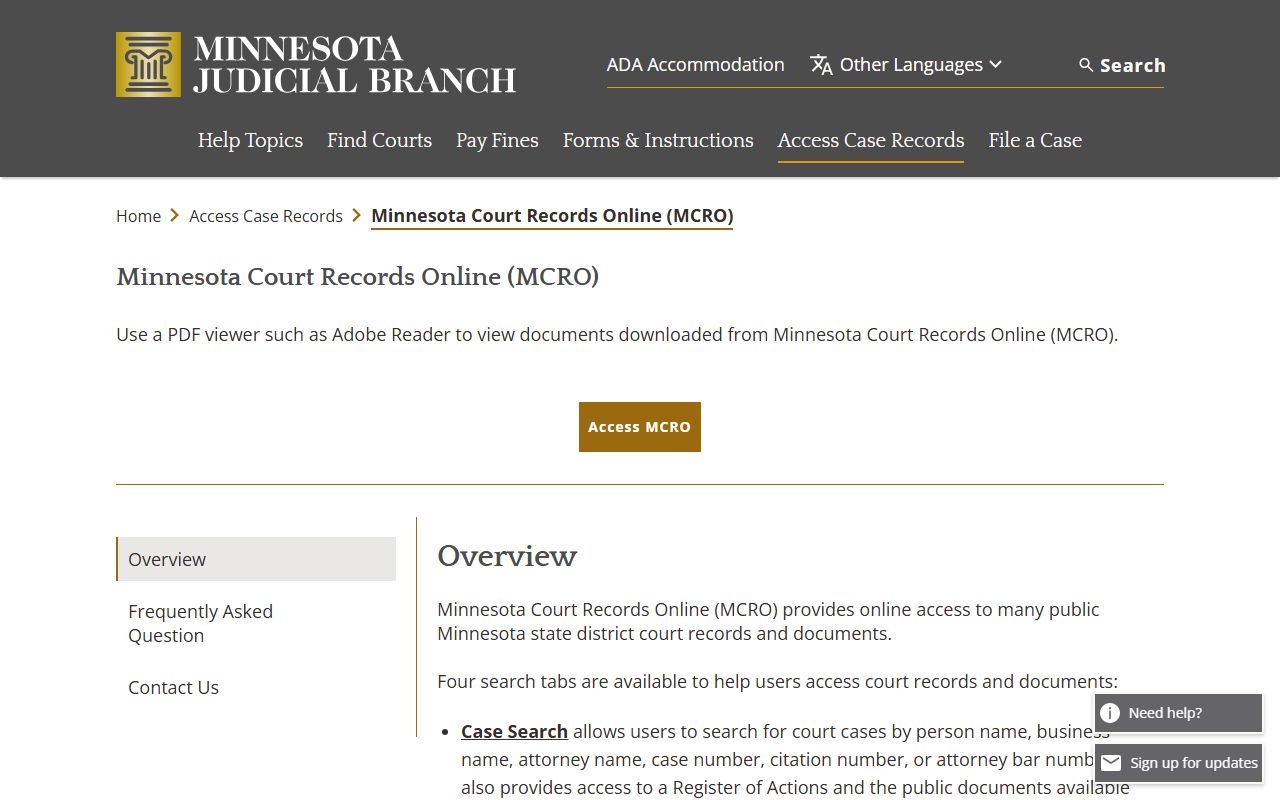
MPA Remote shows case status and docket entries but does not give you full document images, which makes MCRO the better option for most searches.
Types of Minnesota Family Court Records
Family court in Minnesota handles several categories of domestic relations cases. Each type produces its own set of records. All of them stay at the District Court in the county where the case was filed.
Dissolution of marriage is the legal term Minnesota uses for divorce. The main document is the Judgment and Decree. It ends the marriage and sets out terms for property division, child custody, child support, and spousal maintenance. Under Minnesota Statutes Chapter 518, the only ground for dissolution is irretrievable breakdown of the marriage. Minnesota is a pure no-fault state. You do not need to prove anyone did anything wrong.
Child custody and parenting time cases create orders that spell out where children live and how much time each parent gets. These records come up in divorce cases and also in separate custody proceedings between parents who were never married. Under Minn. Stat. § 518.17, the court uses the best interests of the child standard. It looks at 12 factors including the child's relationship with each parent, home stability, and the child's own wishes if old enough. Joint custody is common in Minnesota.
Child support orders set payment amounts based on both parents' incomes and the parenting time split. Minnesota Statutes Chapter 518A governs child support calculations and parentage establishment. Paternity cases create the legal father-child relationship and often lead to child support and custody orders. Domestic abuse protection orders under Minnesota Statutes Chapter 609B are handled by family court, though those records have restricted public access and are not searchable through MCRO.
The Family Court Motions page at mncourts.gov explains how to file motions in family cases and what forms are required.
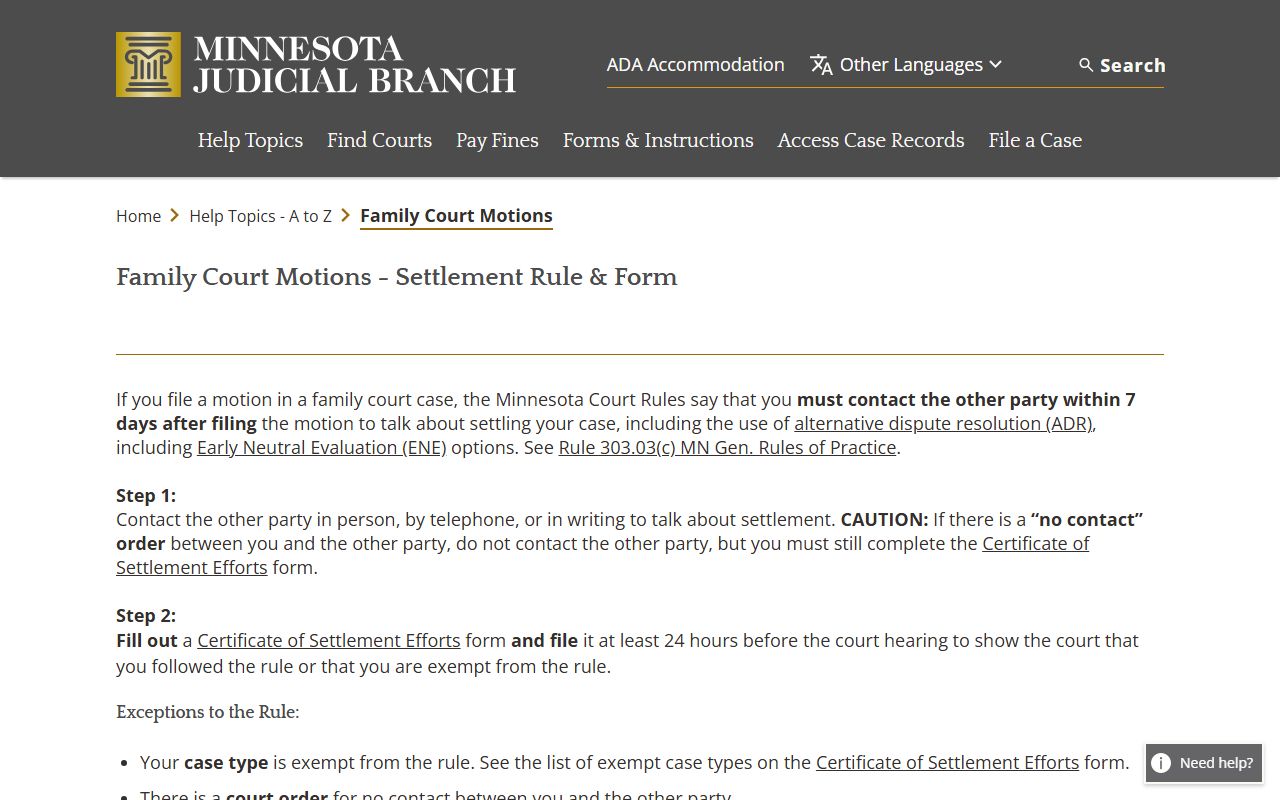
This resource covers post-decree motions to modify custody, parenting time, or child support after the original order is entered, which is one of the most common actions in family court.
Minnesota Family Court Laws
Several key statutes govern family court cases in Minnesota. They set the rules for how cases are filed, how judges decide outcomes, and who can see the records.
All divorce law in Minnesota falls under Chapter 518. This chapter covers everything from filing the petition to dividing property to setting up custody. At least one spouse must have lived in Minnesota for 180 days before filing under Minn. Stat. § 518.07. The court divides marital property under Minn. Stat. § 518.58 using equitable distribution, which means fair but not always 50/50. Property owned before the marriage or received as a gift or inheritance is usually not divided, as long as it stayed separate.
Child protection proceedings are governed by Minnesota Statutes Chapter 260C. This covers child in need of protection or services (CHIPS) proceedings and termination of parental rights cases. These records have restricted access and are not generally available to the public.
Minnesota Statutes Chapter 518A covers parentage and child support. It sets out how courts calculate support, what counts as income, and how to modify orders when circumstances change. Genetic testing rules for paternity cases are also in this chapter. Records retention for child support orders runs until the youngest child reaches age 28.
The Minnesota Statutes page at revisor.mn.gov lets you look up any statute by citation, including the ones that govern family court records access.
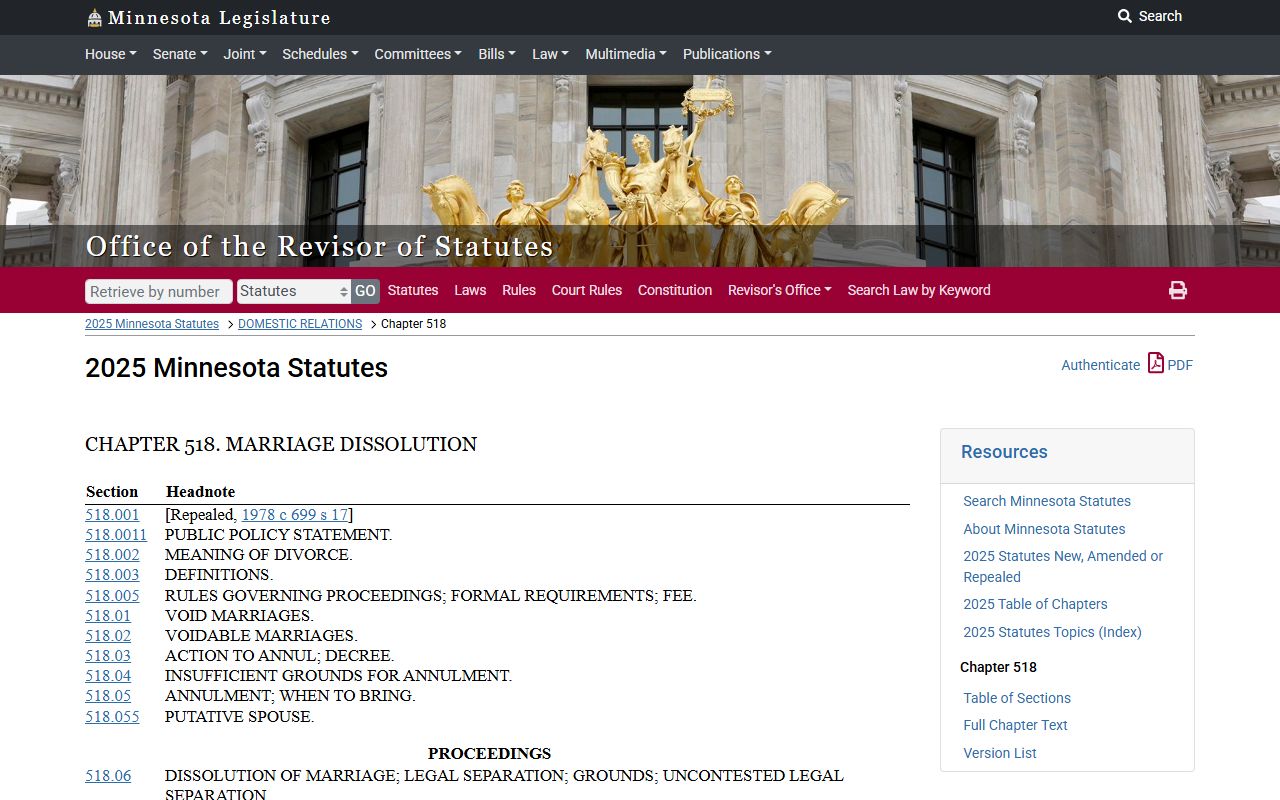
Chapter 518, shown here at revisor.mn.gov/statutes/cite/518, is the main statute for dissolution of marriage in Minnesota and covers property division, custody, and support.
Fees for Minnesota Family Court Records
Plain (uncertified) copies of court documents are free in Minnesota as of July 1, 2023. You can also download documents through MCRO at no charge. Certified copies cost $14 per document statewide. Exemplified copies also cost $14. If you need both certified and exemplified on the same document, the fee is $28.
Filing a family court case costs more. Filing a dissolution of marriage with children runs $405. Without children, the fee is $390. Filing a custody or paternity case costs between $310 and $325 depending on the county. Motion fees are $100 each. Child support motions are $50. Some counties add a small law library surcharge to the statewide base amounts.
All court forms are free at mncourts.gov/GetForms.aspx.
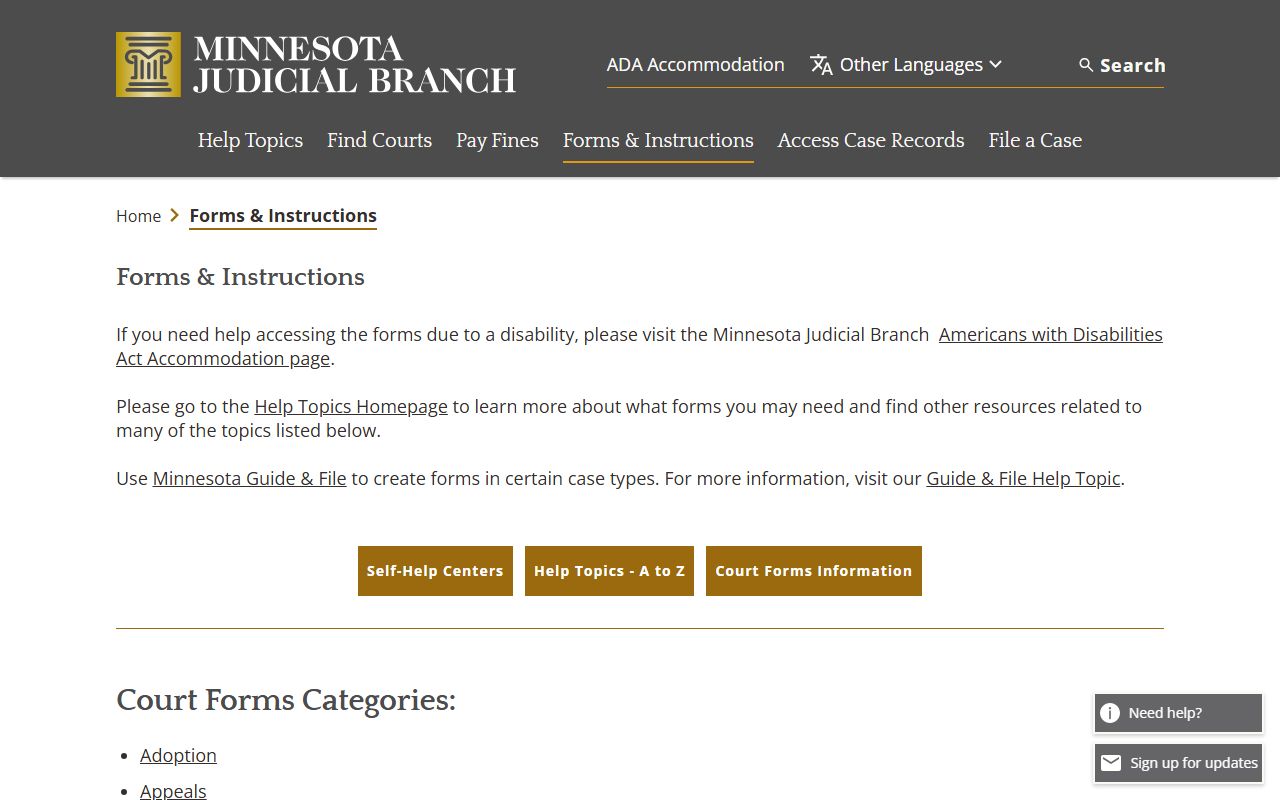
The forms page includes petitions, financial affidavits, parenting plan worksheets, and fee waiver forms for people who cannot afford filing costs.
Fee waivers are available. You file an In Forma Pauperis (IFP) petition showing your income and expenses. The judge reviews your request and decides if you qualify. Waiver forms are at the courthouse or at mncourts.gov/GetForms.aspx.
Note: Contact the Court Administrator in your county to confirm current filing fees before you pay. Fees change occasionally and some counties add small surcharges to the statewide base amounts.
Getting Copies of Family Court Records in Minnesota
To get copies of a family court record, contact the District Court in the county where the case was filed. Visit in person, call, or mail a written request. Bring the case number if you have it. Staff can also search by party names. Plain copies are free. Certified copies cost $14 per document and carry the court seal.
You can request copies using the statewide Copy Request Form. This form can be submitted by mail, fax, or in person to any Minnesota District Court. In-person requests are often handled the same day. Mail requests take about 5 to 10 business days. Include a self-addressed stamped envelope and your payment when mailing a request. Make checks payable to the District Court Administrator for the county.
Some counties accept requests by phone or email with credit card payment. Call the court administration office to ask. Payment is accepted in person by cash, check, money order, or credit card at most locations. Online fine payments go through mncourts.gov/pay-a-fine.
Fine and fee payments can be made online at mncourts.gov/pay-a-fine.
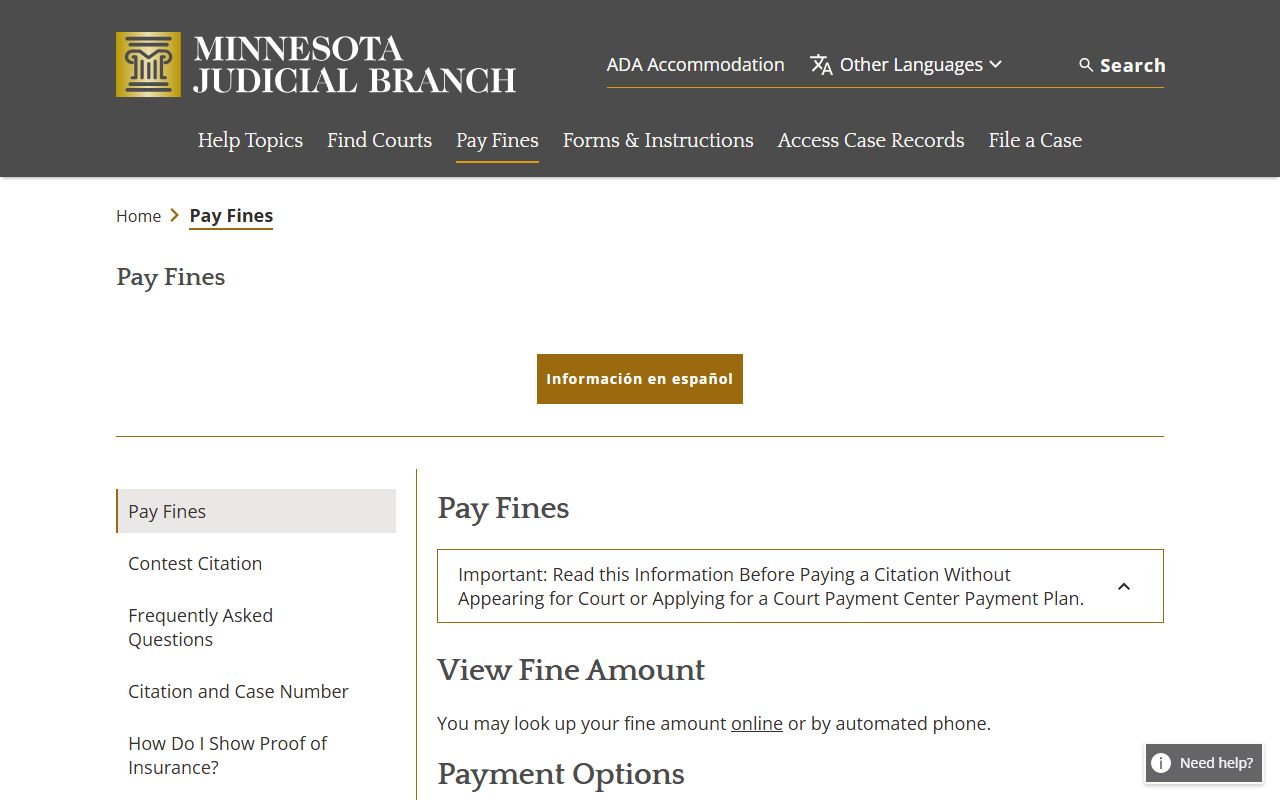
The online payment portal handles traffic, misdemeanor, and civil fees from any county in Minnesota and accepts credit and debit cards.
Use the Court Finder at mncourts.gov to locate the courthouse for your county.
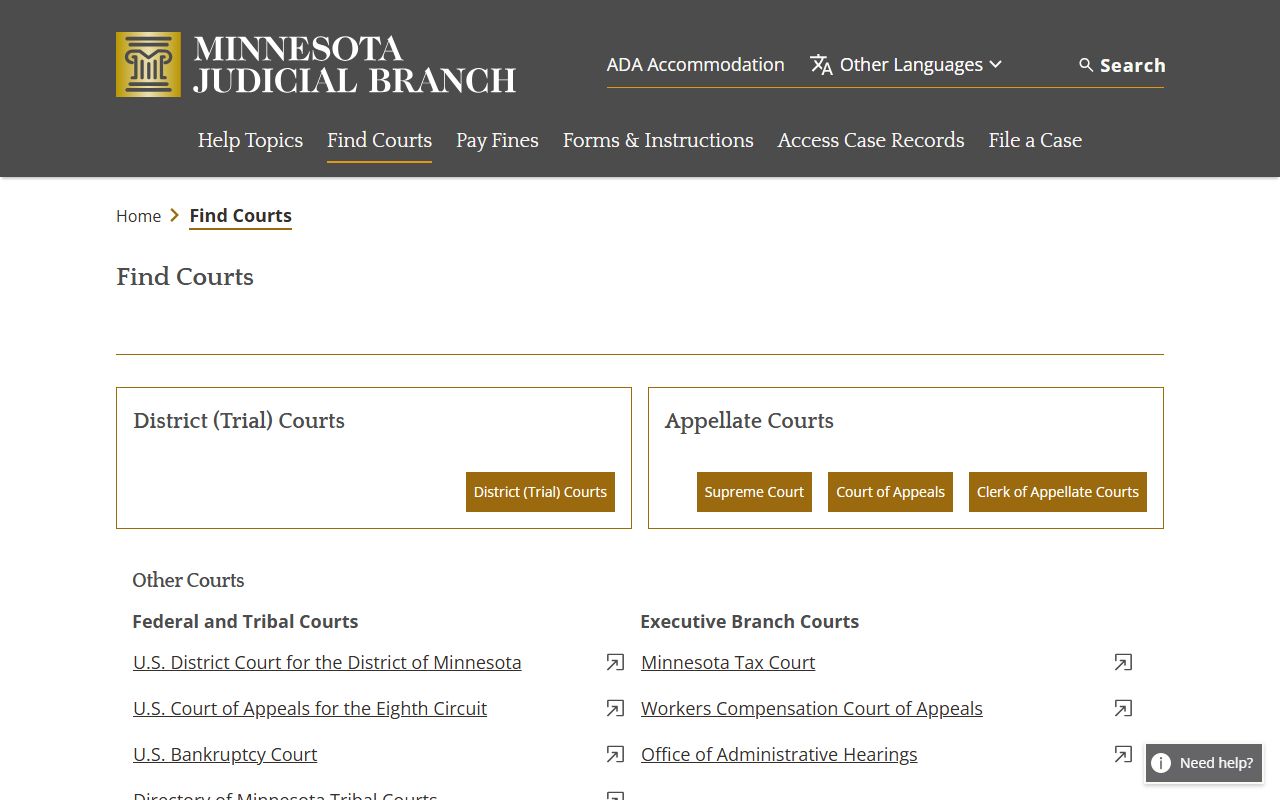
The Court Finder has addresses, phone numbers, fax numbers, and hours for every District Court in all 87 Minnesota counties.
Legal Help for Family Court Cases in Minnesota
Several organizations offer help with family court matters in Minnesota. Legal aid groups serve people with lower incomes. The Minnesota State Bar Association has a lawyer referral service. Most courts also have self-help centers where staff can help you find forms without giving legal advice.
Mid-Minnesota Legal Aid covers the Twin Cities metro area and parts of central Minnesota. Call (612) 334-5970 to ask about family law services. LawHelpMN at lawhelpmn.org has self-help guides and resources for people handling their own cases. The Volunteer Lawyers Network offers free clinics on family law. Call (612) 752-6677 during clinic hours, which run Monday through Thursday from 10 AM to 1 PM. Spanish legal services are available through VLN as well.
The Minnesota State Bar Association's referral service connects you with a family law attorney in your area. Call (612) 752-6699 or visit mnbar.org to search online. The Judicial Branch Self-Help page at mncourts.gov has step-by-step instructions and all court forms. For background record checks, the Bureau of Criminal Apprehension (BCA) runs public searches at chs.state.mn.us for $8 per name.
The Bureau of Criminal Apprehension criminal history search portal at chs.state.mn.us is the public system for criminal record searches in Minnesota.
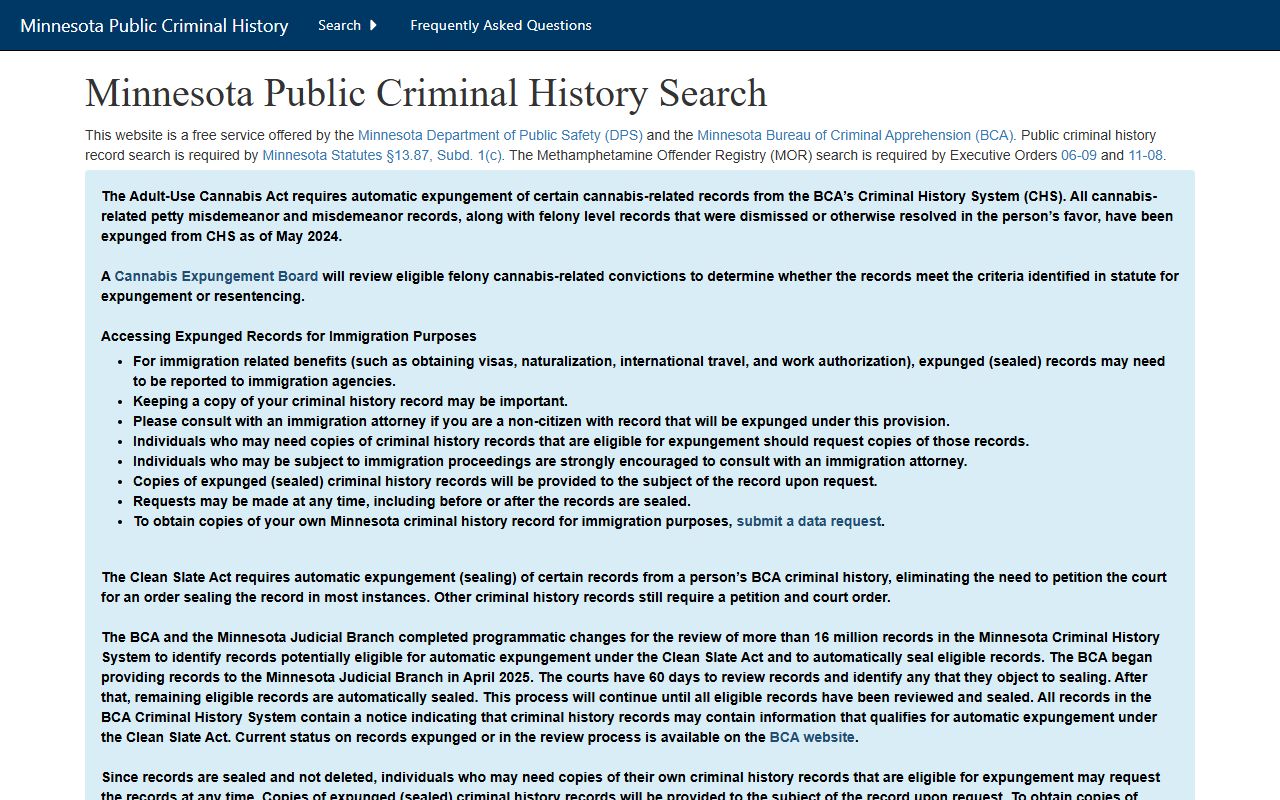
The BCA search, operated by the Minnesota Department of Public Safety, provides public criminal history records statewide for a $8 per-name fee and is separate from family court records.
Are Family Court Records Public in Minnesota
Yes. Court records in Minnesota are generally public under the Rules of Public Access to Records of the Judicial Branch. You do not have to be one of the parties. You don't need to give a reason for your request. Most of the case file is open to anyone who asks at the District Court.
Some family court records have restricted access. Adoption records are sealed and confidential. Juvenile records have limited access by statute. Records in domestic abuse and harassment cases are not searchable through MCRO. Civil commitment records are restricted. Even in public files, social security numbers, bank account numbers, and financial source documents like tax returns are redacted. A party can ask the court to seal other records if they have a strong reason, but sealing is not common.
Most Minnesota family court records are open to the public. Records related to adoption, juvenile proceedings, domestic abuse, and harassment cases have restricted access under state law.
Browse Minnesota Family Court Records by County
Each of Minnesota's 87 counties has its own District Court that handles family court cases. Pick a county below to find local contact info, court addresses, and resources for family court records in that area.
Family Court Records in Major Minnesota Cities
City residents file family court cases at the District Court in their county. Pick a city below to find out where to go for family court records in that area.